Shower Pressure Repair covers showerhead and fixture flow issues; typical repairs run $150–$500, depending on parts and access.
Why Hot Water Pressure Is Lower Than Cold Water Pressure
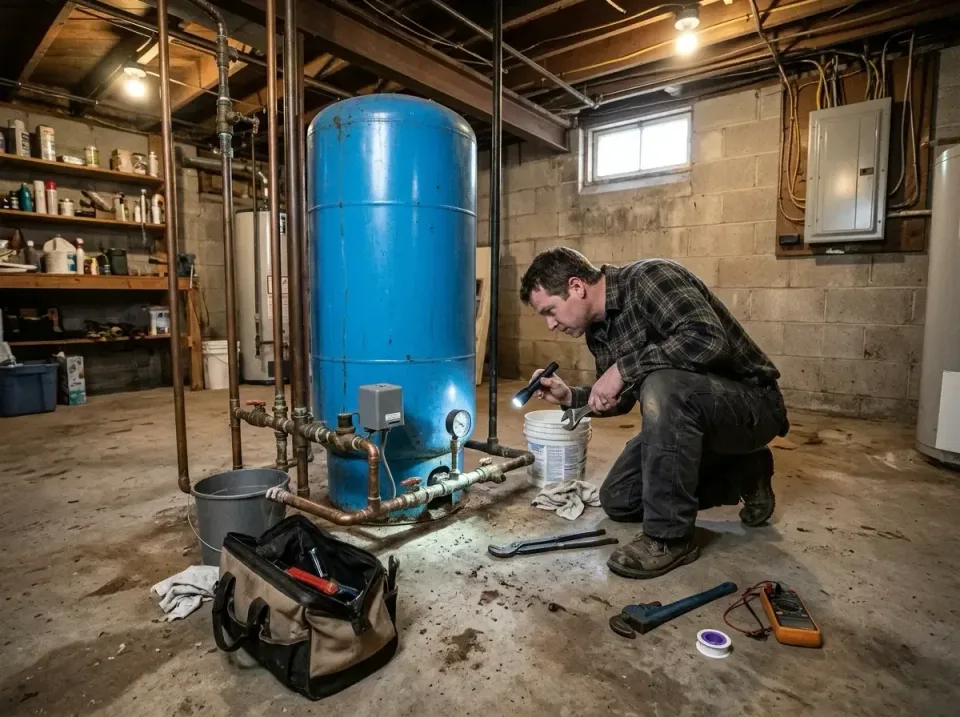
Why Does Hot Water Pressure Run Lower Than Cold?
If hot water runs weak while cold water flows normally, the restriction is often somewhere on the hot-water side. A narrowed pipe, a partially closed valve, or a problem affecting a water-heating system can reduce delivery before water reaches the tap. The pattern matters.
-
One faucet: Check whether its outlet is restricted before assuming the whole system has a problem.
-
Several hot taps: A shared hot-water pipe or valve may be limiting flow to multiple fixtures.
-
Private well: A pressure tank bladder that has lost its ability to hold pressure can make delivery uneven; have the tank assessed rather than adjusting it blindly.
-
Municipal water: A city supply serves the property, but a hot-only symptom still points attention toward the home’s hot-water path.
Our crew separates a fixture issue from a broader restriction before proposing work. Call Kentucky Plumbing Pros at (877) 773-0781 to discuss what you’re seeing.
Why Does Hot Water Weaken at Several Taps?
When multiple hot taps run poorly but their cold sides are stronger, look for a shared restriction after the water enters the home. A sticking valve, buildup inside older pipe, or a narrowed passage can reduce hot-side delivery; replacing a faucet will not solve a problem affecting several rooms.
The symptom may become more noticeable during Kentucky’s hot, humid summers, when people use more indoor cooling and may also draw water at busy times. That timing does not prove the cooling system caused the pressure change.
Note whether the weakness appears at the same fixtures and whether it changes when other taps are running. Near the Florence Y’all Water Tower, a landmark that helps orient local service calls, we still diagnose the home’s plumbing rather than infer the cause from location.
For other whole-home patterns, see why water flow is weak at every faucet.
Could a Water Filter Be Restricting Hot Flow?
A filter is worth checking if hot water passes through that equipment or a dedicated hot-water treatment setup; many household filters treat only cold water, so their presence alone does not explain weak hot taps. A loaded cartridge or restricted connection can limit flow where the plumbing arrangement sends water through it. Check the filter’s service information and look for a change that began after replacement or a change in water use.
Do not bypass treatment equipment or alter its connections without knowing how it is installed. A correct comparison at fixtures on either side of the equipment can help narrow the location.
In the Paducah Lower Town Arts District, as elsewhere in Kentucky, a home’s actual pipe layout matters more than a guess based on the neighborhood. During heavy rain, groundwater and sump-pump workloads can also demand attention in a basement; keep plumbing observations separate from sump activity unless there is evidence of a leak or water intrusion.
When Should You Call Instead of Troubleshooting?
You can clean a removable faucet screen if only one outlet is affected and you can remove it without force. Stop if the fitting is corroded, a valve will not turn, or several hot fixtures have lost flow; forcing old plumbing can turn a pressure complaint into a leak.
Cold snaps can freeze exterior hose bibs and service lines, but that possibility does not automatically explain a hot-only problem indoors. If an outside tap or exposed line has frozen, avoid applying an open flame and arrange a safe assessment.
Our crew can compare hot and cold delivery, trace the affected plumbing, and explain what the findings support before work begins. If someone else using a tap makes the shower noticeably weaker, read why shower pressure drops when another tap is used; that pattern may involve shared demand rather than a hot-side restriction alone.
What Does the Hot-Side Pattern Tell You?
A single weak hot faucet suggests a local fixture or connection; several weak hot faucets point toward a shared section of the hot-water plumbing. If hot and cold both weaken across the house, the cause may be broader than the hot side.
Compare the same fixture’s hot and cold flow, then repeat that check at another faucet. Keep the notes simple: which taps, how long the flow has been weak, and whether the symptom changes during use.
Water pressure diagnosis should follow those observations, not skip ahead to a part replacement. At My Old Kentucky Home State Park, visitors may see historic buildings, but a home’s age alone cannot confirm pipe scale or a failed valve. We inspect the affected route and explain the evidence so you can decide on a repair with a clear scope.
Which Hot-Water Pressure Fix Fits the Symptoms?
The right option depends on whether the restriction affects one outlet, several hot taps, or the whole supply. A plumber may need access to the basement or crawlspace to follow concealed piping and compare the affected routes. Here are common distinctions:
| Option | Best for | Key detail |
|---|---|---|
| Fixture check | One weak hot faucet | Compare that faucet’s hot and cold sides before changing shared plumbing. |
| Hot-side pipe assessment | Several weak hot taps | Traces a restriction affecting more than one fixture. |
| Well pump and tank repair | A private-well home with broader pressure symptoms | The pump and tank work together; equipment access helps identify the fault. |
| Pressure-regulating equipment check | Hot and cold flow both seem affected | A regulator controls incoming pressure, not a hot-only restriction by itself. |
The history of mixing faucets helps explain why hot and cold can meet at one handle: William Feetham patented a mixing valve in 1880, and Al Moen later developed a single-handle mixing faucet in 1937. Neither date diagnoses today’s plumbing.
Amtrol equipment may be part of a home’s well system, so identify the model before assuming a tank problem. Louisville Waterfront Park is a useful local reference, but the deciding detail remains the property’s plumbing layout.
What Diagnosis Detail Helps Find a Hot-Side Restriction?
Pro tip: A careful whole-home diagnosis starts by mapping which fixtures have weak hot flow and comparing them with their cold sides. That diagnosis helps separate a faucet aerator blockage from a shared hot-water restriction; a faucet aerator is the small screen at the outlet, and cleaning it is a reasonable first step only when one fixture is affected.
Common mistake: Adjusting a valve before identifying what it controls.
If the flow changed suddenly or the affected fixtures are not obvious, write down which taps are involved before calling. Kentucky homes near Breaks Interstate Park and elsewhere have different layouts, so the practical next step is a fixture-by-fixture check not a one-size-fits-all adjustment.
If the plumbing serves a commercial building, facility plumbing coordination can help plan access and water interruptions around occupants; that is different from an emergency leak response. We can review the symptoms and arrange a clear diagnostic path.
Common Questions About Low Water Pressure Repair in Kentucky
Why Is Hot Water Pressure Low at Every Faucet but Cold Pressure Is Normal?
Low hot flow at every faucet points toward a shared hot-water restriction rather than a single clogged outlet. Note which fixtures are affected and ask for Low Hot Water Pressure Repair to trace the hot-side route before replacing taps.
Could Hot Water Pressure Drop Only When the Shower Runs?
Yes, a shower-only drop can come from a fixture restriction or a change in delivery under demand, so compare another hot tap while the shower is running. Kentucky’s State Plumbing Code is in 815 KAR Chapter 20; a Kentucky licensed plumbing contractor can assess plumbing changes that may require code-compliant work.
How Much Does It Cost to Diagnose Lower Hot Water Pressure?
Pressure diagnosis is listed at $75–$250, with testing and access affecting the work involved. Kentucky Plumbing Pros can explain the planned checks and quote the repair separately after identifying the cause; final quotes vary by scope, parts, access, and site conditions.
Can I Fix Weak Hot Water Pressure Myself Before Calling a Plumber?
Yes, if only one faucet is affected, you can inspect and clean its removable aerator when it comes off safely; stop if it is stuck or corroded. If several hot taps are weak or a valve leaks, contact Kentucky Plumbing Pros for diagnosis rather than forcing the plumbing.
Do I Need a Permit for Low Hot Water Pressure Repair in Louisville?
Permit needs depend on the repair scope, so ask before work that changes or replaces plumbing components. Louisville Metro plumbing permit requirements may apply, and Louisville Metro Government’s Department of Codes and Regulations is a relevant source for local requirements.
Get a Clear Answer for Weak Hot Water Flow
Hot flow that is weaker than cold usually calls for a look at the hot-water route, especially when more than one fixture is affected. One weak outlet may have a local restriction; several weak hot taps deserve a broader check. Acting early can help you avoid replacing a fixture that is not the source of the problem.
We serve homeowners across Kentucky, from areas near Abraham Lincoln Birthplace National Historical Park to communities close to Ashland, The Henry Clay Estate. Our water-conscious plumbing recommendations focus on the observed cause and a repair suited to the home, not unnecessary water use or guesswork. For a careful assessment, contact Kentucky Plumbing Pros at (877) 773-0781 and ask about Low Hot Water Pressure Repair.
Services Offered
Services We Offer in Louisville, KY
Explore related services available in Louisville, KY.
We test home pressure at hose bibs or laundry connections; access and seasonal protection needs shape the quote. University of Kentucky homeowners can plan around year-round rain and autumn pipe checks.
Whole-house pressure repairs trace weak flow across residential plumbing; typical work may run $150–$1,500, depending on access and repair scope.
No Water Pressure Repair tracks a complete home water loss to a valve, service line, or supply problem; many straightforward visits run about $100–$500, depending on access and repair scope.
We trace sudden home-wide pressure drops and repair the cause; access, parts, and the affected line determine typical job cost.
We trace weak hot-water flow to restrictions in the heater or hot-water piping; repair scope and access shape the quote. Churchill Downs-area homes can schedule around storm-season disruption.
We trace changing household pressure to its cause and repair the affected components; many straightforward jobs run $150–$500, depending on parts and access.
We repair or replace residential pressure regulators, checking valve condition and connections; parts, access, and regulator size shape the job cost.
We repair residential filter housings and cartridges; Newport Aquarium visitors know clean water matters, while storms near Churchill Downs can complicate access.
We locate and repair leaking water service lines, including buried pipe sections; typical repairs run $250–$1,500, depending on leak location and excavation.
Single Faucet Pressure Repair clears faucet aerator blockages and addresses fixture-level flow problems for homeowners; typical repairs run $125–$350, depending on access and parts.
We repair or replace residential main shutoff valves, accounting for valve size and access; replacement commonly runs $200–$600.
We repair residential well pumps, checking pressure controls and accessible connections; typical costs depend on pump components and site access.
We repair residential well pressure tanks, including tank components; typical jobs run $250–$1,200, depending on tank capacity and parts needed.
Clogged water line repair clears buildup in accessible home pipes; typical jobs run $150–$600, depending on blockage location and access.
Pipe Scale Removal clears mineral buildup from accessible household piping; typical jobs run $300–$1,500, depending on pipe length, access, and scale severity.
Cities & Towns
Service Areas in Louisville
Select a city to find local low water pressure repair providers we cover in Louisville.
Georgetown, KY40324Glasgow, KY42141Somerset, KY42503Barbourville, KY40906Maysville, KY41056Fulton, KY42041Prestonsburg, KY41653Wilder, KY41071Independence, KY41051Junction City, KY40440Reidland, KY42003Grayson, KY41143Providence, KY42450Leitchfield, KY42754Stanton, KY40380London, KY40741Dayton, KY41074Anchorage, KY40223Madisonville, KY42431Taylor Mill, KY41015La Grange, KY40031Cave City, KY42127Park Hills, KY41011Middletown, KY40243
Show all 171 cities
Francisville, KY41048Fort Campbell North, KY42223Flatwoods, KY41139Hillview, KY40229Berea, KY40404Pioneer Village, KY40229Lancaster, KY40444Prospect, KY40059Williamstown, KY41097Hazard, KY41701Warsaw, KY41095Newport, KY41071Fort Knox, KY40121Crestwood, KY40014Marion, KY42064Crestview Hills, KY41017Brandenburg, KY40108Corbin, KY40701Louisa, KY41230Cumberland, KY40823Jamestown, KY42629Springfield, KY40069Mount Vernon, KY40456Winchester, KY40391Burlington, KY41005Graymoor-Devondale, KY40222
Get a Quote
Get a Low Water Pressure Repair Quote in Louisville, KY
Share job details below or call our team directly. Phone: (877) 773-0781