Shower Pressure Repair covers showerhead and fixture flow issues; typical repairs run $150–$500, depending on parts and access.
Why Water Pressure Changes When Appliances Start in Louisville, KY
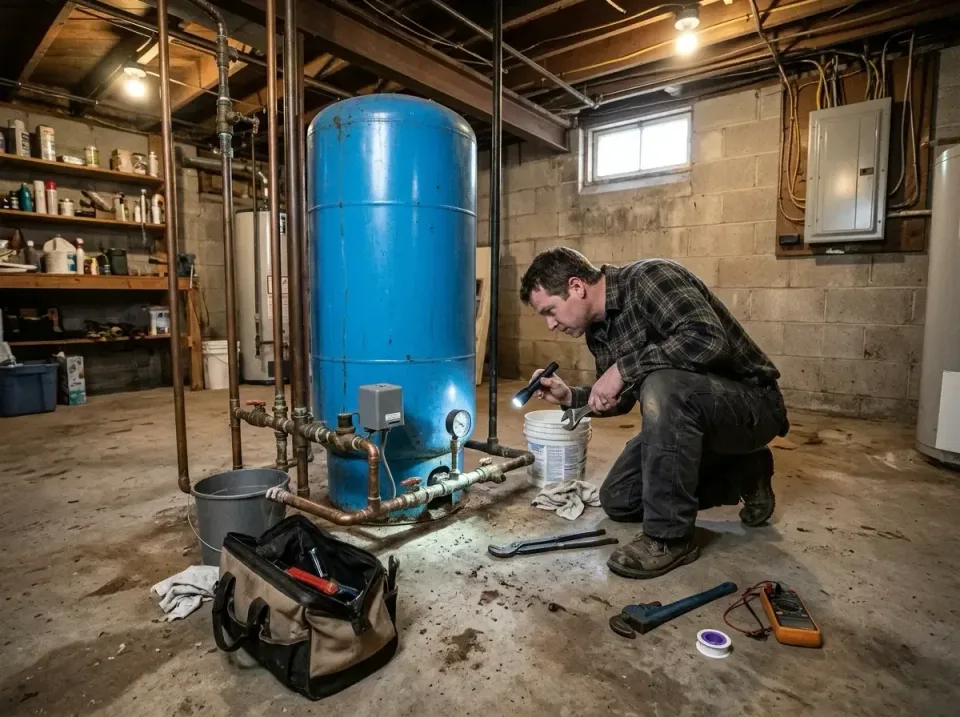
Why Does Pressure Dip When Appliances Start?
When an appliance starts and nearby taps weaken, the home’s water supply may be struggling to meet simultaneous demand. In Louisville, our building water service assessment checks how water enters the property and whether the change is isolated or affects the whole home. That distinction matters: a fixture restriction calls for a different fix than a supply problem, and replacing parts without testing can waste money.
Dependable pressure restoration means correcting the cause rather than simply turning up a control. Our crew has worked in Louisville homes where a clear diagnosis saved homeowners from paying for repairs that would not address the pressure drop.
What Appliance Starts Reveal About the Water Supply
A pressure dip when a washer or dishwasher fills can point to a supply problem that only shows up under demand. A static reading taken with taps closed may look normal, while flowing pressure falls as an appliance draws water. We compare readings during use and track which fixtures are affected before recommending work. That is the practical value of precision pressure assessment: it separates a brief, expected dip from a recurring loss that needs repair.
A pressure logging data logger can record changes over time, helping us see whether the drop follows one appliance cycle or persists throughout the day. Homes near Louisville Waterfront Park and elsewhere can have different plumbing layouts and histories; the test needs to match the home, not a guess. Louisville’s humid continental climate brings warm summers and cool winters, but seasonal weather alone does not explain every pressure swing.
Can a Regulator Cause Pressure to Fall?
Yes, a pressure regulator can contribute if it is worn, incorrectly set, or unable to keep supply steady as demand changes. We inspect the regulator and compare pressure before and during appliance use rather than adjusting it by feel. A regulator adjustment is not a universal fix: if the restriction is elsewhere, raising the setting may leave the original problem untouched or create excessive pressure.
Municipal water service coordination may be appropriate when testing points toward the incoming supply rather than plumbing inside the home. For a private well water system, the pump and pressure equipment also need consideration because the household depends on them to maintain delivery. We explain what the measurements show before deciding which path fits.
When Should You Call Instead of Trying a Fix?
If only one faucet weakens, check whether its handle is fully open and whether the problem remains after removing and rinsing a removable aerator. Do not adjust the regulator or dismantle plumbing equipment without knowing what the control does. Stop DIY troubleshooting if several fixtures lose flow together, the drop continues after an appliance stops, or you see signs of a leak.
At public facilities, a public facility pressure assessment helps establish whether a pressure complaint affects one fixture group or a wider distribution system; that same distinction matters in a home. University of Louisville properties and nearby residences may have different layouts, so our troubleshooting starts with the affected fixtures and the timing of the change. For a deeper look at shared-tap symptoms, read why shower pressure drops when another tap runs.
What the Pressure Pattern Can Tell You
A whole-home dip during several appliance cycles points toward a different problem than one weak shower. Note the appliance, affected fixtures, and whether hot and cold sides behave differently. Those observations help us narrow the cause before opening walls or replacing equipment.
If the pressure change is limited to one fixture, a local restriction is more likely; if several rooms respond together, we examine the home’s supply and distribution. A water pressure diagnosis gives the technician a structured way to test those possibilities. We protect the work area, explain what we find in plain language, and agree on the repair before proceeding.
Which Pressure Check Fits Appliance-Related Drops?
If pressure falls when a washer fills but a nearby sink stays steady, the affected fixtures and supply layout guide the next check. The right option depends on whether the restriction is local, shared, or tied to a well system.
| Option | Best for | Key detail |
|---|---|---|
| Fixture-by-fixture diagnosis | Uneven symptoms | A ¾-inch branch line may serve several fixtures, so identify which ones dip together. |
| Whole-house restoration | Multiple rooms affected | A technician traces the shared supply before choosing a repair. |
| Well pump and tank check | Private-well homes | A well pressure switch controls pump cycling; cycling symptoms help focus testing. |
| Gauge testing | Comparing readings | A 0–200 PSI gauge can capture a range of supply conditions. |
Residential supply pressure should be interpreted in PSI, not judged by feel alone. Ask what was tested and whether readings were taken while the appliance was drawing water.
A Flow Meter Can Catch Hidden Pressure Swings
Pro tip: An inline water flow meter can show whether an appliance’s draw coincides with a change in the building’s water delivery, rather than relying on a quick glance at one tap. For homeowners near Louisville Muhammad Ali International Airport, a Louisville plumber should still assess the actual property; location alone does not identify the cause. Check the water line fitting and accessible connections for visible moisture, but leave concealed or pressurized piping to a trained technician.
Common mistake: Treating every pressure dip as a reason to turn up the regulator. A building water distribution system may have a restriction or leak that needs diagnosis instead. Kentucky’s humid continental climate brings warm summers and cool winters, but a seasonal temperature shift does not prove why appliance-start pressure changes.
Common Questions About Low Water Pressure Repair in Kentucky
Can Water Pressure Change Only When My Washer Starts?
Yes, a washer can expose a pressure drop that is not obvious when water is standing still. Note whether other fixtures weaken at the same time, then have a technician compare readings during the fill cycle.
What Does Pressure Diagnosis Cost for Appliance-Related Drops?
Pressure diagnosis is $75–$250, with testing and access affecting the work involved. Kentucky Plumbing Pros can explain what access is needed and what the diagnostic visit covers before proceeding.
Should I Adjust the Regulator When Appliances Make Taps Weak?
No, do not change the regulator setting just to mask a dip without confirming the cause. Call Kentucky Plumbing Pros if several fixtures lose flow together or the pressure stays low after the appliance stops.
Do Louisville Permits Apply to Pressure Repairs After Appliance-Start Drops?
Permit and inspection needs depend on the planned work; Kentucky State Plumbing Code, 815 KAR Chapter 20, and Louisville Metro plumbing permit requirements are relevant references. A Kentucky licensed plumbing contractor can help determine which requirements apply to the specific repair.
Could a Clogged Filter Cause Pressure Changes When Appliances Start?
Yes, a restricted water filter cartridge can limit available flow and make simultaneous use more noticeable. If replacing the cartridge does not resolve the symptom, a Water Pressure Diagnosis can check whether another restriction or a well pressure tank issue is involved.
Get Appliance-Related Pressure Changes Checked
A pressure dip that appears only when an appliance runs is useful evidence, especially when you can identify which taps change and how long the effect lasts. In Old Louisville, as in other parts of the city, a pressure gauge connection can help a technician compare the home’s readings under real use.
Pressure zone verification helps establish whether the issue lies with a supply area or inside the property, rather than treating symptoms at random. The goal is refined whole-home water performance, not a higher setting without proof.
Louisville’s cool winters can bring occasional freezing temperatures, so mention any recent cold-weather exposure as part of the history. For a clear next step, contact Kentucky Plumbing Pros about water pressure diagnosis.
Services Offered
Services We Offer in Louisville, KY
Explore related services available in Louisville, KY.
We test home pressure at hose bibs or laundry connections; access and seasonal protection needs shape the quote. University of Kentucky homeowners can plan around year-round rain and autumn pipe checks.
Whole-house pressure repairs trace weak flow across residential plumbing; typical work may run $150–$1,500, depending on access and repair scope.
No Water Pressure Repair tracks a complete home water loss to a valve, service line, or supply problem; many straightforward visits run about $100–$500, depending on access and repair scope.
We trace sudden home-wide pressure drops and repair the cause; access, parts, and the affected line determine typical job cost.
We trace weak hot-water flow to restrictions in the heater or hot-water piping; repair scope and access shape the quote. Churchill Downs-area homes can schedule around storm-season disruption.
We trace changing household pressure to its cause and repair the affected components; many straightforward jobs run $150–$500, depending on parts and access.
We repair or replace residential pressure regulators, checking valve condition and connections; parts, access, and regulator size shape the job cost.
We repair residential filter housings and cartridges; Newport Aquarium visitors know clean water matters, while storms near Churchill Downs can complicate access.
We locate and repair leaking water service lines, including buried pipe sections; typical repairs run $250–$1,500, depending on leak location and excavation.
Single Faucet Pressure Repair clears faucet aerator blockages and addresses fixture-level flow problems for homeowners; typical repairs run $125–$350, depending on access and parts.
We repair or replace residential main shutoff valves, accounting for valve size and access; replacement commonly runs $200–$600.
We repair residential well pumps, checking pressure controls and accessible connections; typical costs depend on pump components and site access.
We repair residential well pressure tanks, including tank components; typical jobs run $250–$1,200, depending on tank capacity and parts needed.
Clogged water line repair clears buildup in accessible home pipes; typical jobs run $150–$600, depending on blockage location and access.
Pipe Scale Removal clears mineral buildup from accessible household piping; typical jobs run $300–$1,500, depending on pipe length, access, and scale severity.
Cities & Towns
Service Areas in Louisville
Select a city to find local low water pressure repair providers we cover in Louisville.
Rineyville, KY40162Beaver Dam, KY42320Irvine, KY40336Hodgenville, KY42748Richmond, KY40475Morgantown, KY42261Mount Washington, KY40047Russell, KY41139Benton, KY42025Westwood, KY41101Jamestown, KY42629Jackson, KY41339Cynthiana, KY41031Vine Grove, KY40160Hartford, KY42347Madisonville, KY42431Villa Hills, KY41017Middlesborough, KY40965Hardinsburg, KY40143Paducah, KY42001Stanford, KY40484Massac, KY42001Danville, KY40422Fort Thomas, KY41075
Show all 171 cities
Carrollton, KY41008Franklin, KY42134Russell Springs, KY42642Columbia, KY42728Junction City, KY40440Buckner, KY40010Lancaster, KY40444Prestonsburg, KY41653Edgewood, KY41017Morehead, KY40351Cadiz, KY42211Elizabethtown, KY42701Greensburg, KY42743Elsmere, KY41018Greenville, KY42345Bowling Green, KY42101Barbourville, KY40906Alexandria, KY41001Fort Campbell North, KY42223Lyndon, KY40242Independence, KY41051Ashland, KY41101Radcliff, KY40160Carlisle, KY40311Hendron, KY42003Monticello, KY42633
Get a Quote
Get a Low Water Pressure Repair Quote in Louisville, KY
Share job details below or call our team directly. Phone: (877) 773-0781