Shower Pressure Repair covers showerhead and fixture flow issues; typical repairs run $150–$500, depending on parts and access.
Why Upstairs Faucets Barely Run—and What to Check First
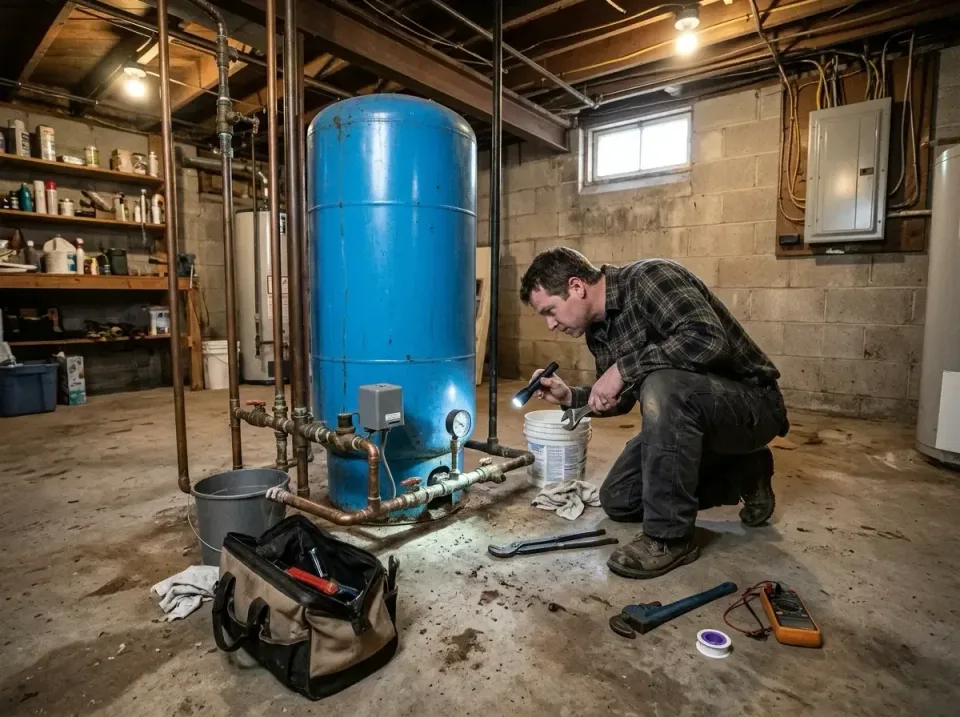
Why Do Upstairs Faucets Barely Run?
When upstairs faucets barely run, check whether the problem affects one fixture or several, then compare the flow downstairs. That simple distinction can point toward a blocked faucet part or a restriction affecting the home’s supply.
-
Static pressure: This is the supply reading when no water is moving; a normal-looking reading alone does not prove a faucet will flow well during use.
-
Pressure regulator: This device reduces incoming supply pressure, and a worn or misadjusted regulator can leave upper-floor taps weak even when lower fixtures seem usable.
-
Fixture pressure repair: If only one faucet is affected, cleaning its aerator or repairing that fixture may address the problem without changing the rest of the plumbing.
In Kentucky, humid continental weather brings warm summers and cool winters, while older homes near Old Louisville may have plumbing conditions that deserve a careful look. We trace the symptom before recommending work; call Kentucky Plumbing Pros at (877) 773-0781 if several upstairs fixtures remain weak.
What Does a Weak Upstairs Faucet Tell You?
Weak flow at an upstairs faucet does not automatically mean the whole house has low pressure. Check a second upstairs tap and a downstairs fixture first: if one faucet is affected, a clogged aerator or worn fixture part is a stronger lead; if several are weak, the cause may be farther back in the plumbing.
A faucet can also seem fine until another fixture draws water. Dynamic water pressure describes how the supply behaves while water is moving, so a pressure drop under demand can reveal a restriction that a no-flow reading misses.
In Kentucky homes, we have seen mineral buildup and aging components narrow the path to upper-floor fixtures. The history of the single-handle faucet including its commercial introduction by Moen in 1947 does not change the basic check: compare more than one fixture before treating the issue as whole-house trouble.
For a broader comparison of fixture symptoms, see why water flow is weak at every faucet in a Kentucky home.
Could a Shower Drop Point to the Same Restriction?
If shower pressure suddenly drops when someone opens another tap, the water supply may be struggling to meet demand rather than the showerhead simply being dirty. A shower that stays weak by itself deserves a different check from one that weakens only when another fixture runs.
Ask whether the change happens with hot water, cold water, or both. Note which other fixtures are running and whether the problem is limited to the upper floor.
Those details help distinguish a fixture-specific issue from a broader pressure loss. Kentucky’s humid continental climate brings warm summers and cool winters, but seasonal comfort needs do not explain a persistent plumbing restriction.
We use the pattern of the drop not a guess based on the floor to decide what to inspect next. Read more about shower pressure drops when someone uses another tap.
How Can You Check a Pressure Regulator Safely?
Start with observation, not adjustment. Find the regulator only if you know where it is, look for visible damage or signs of leakage, and avoid turning its adjustment screw to compensate for weak upstairs flow. A regulator that is failing may need repair or replacement; changing its setting without measuring the result can create another problem elsewhere in the home.
A pressure gauge can help show what the system is doing, but one reading does not explain every pressure complaint. The 2021 International Plumbing Code and 2021 International Residential Code are useful references for plumbing requirements; installation details and applicable local rules still matter.
Components that contact drinking water should meet NSF/ANSI/CAN 61 requirements. Our crew checks the regulator and compares fixture behavior before recommending a repair, rather than treating every weak faucet as a regulator failure.
When Should You Stop DIY Checks and Call a Plumber?
Cleaning a faucet aerator is a reasonable homeowner check if only one tap is affected and you can remove and reinstall the part without forcing it. Stop if a valve is stuck, a fitting begins to leak, or several fixtures have weak flow. Forcing old plumbing can turn a small restriction into a leak or leave the home without usable water.
The same rule applies if the pressure problem changes suddenly or keeps returning after a simple fixture check. Kentucky Plumbing Pros has served Kentucky for more than 11 years; our process is to compare affected fixtures, inspect accessible components, explain the finding plainly, and protect the home while completing agreed work. A Water Pressure Diagnosis can help identify whether the trouble sits at a faucet or farther along the supply.
Which Checks Help Find Weak Upstairs Flow?
The right next step depends on whether weak flow is limited to one fixture or appears across several taps; these checks help narrow the cause before repair.
| Option | Best for | Key detail |
|---|---|---|
| Clean the faucet aerator | One weak faucet | A common household pipe is ½-inch; debris at the fixture can restrict flow without proving a pipe problem. |
| Inspect the regulator | Multiple weak fixtures | Regulator connections commonly measure ¾–1 inch; inspection and adjustment should follow a measured diagnosis. |
| Trace a suspected pipe leak | Moisture or unexplained pressure loss | Isolate the leak before opening or repairing a pipe, so the repair targets the affected section. |
| Verify a completed repair | Flow remains uncertain after work | Post-repair pressure verification checks whether the correction restored the expected performance. |
A comparison of pressure with no water moving and during use helps show whether the system loses performance under demand. Our technicians verify the result after agreed work instead of assuming a replaced part fixed the symptom.
What Do Plumbers Check First for Weak Upstairs Faucets?
Pro tip: Separate fixture-specific trouble from a whole-house pattern before touching the regulator. Pipe scale can narrow older plumbing from the inside, so several weak taps deserve a different investigation than one faucet with a restricted aerator. We test pressure at a hose bib or laundry connection to get a reading away from the faucet itself.
Municipal supply and private-well systems call for different checks; a well system’s pressure behavior may involve its pump and tank rather than a city-side regulator. Static pressure is measured with water stopped, while flowing pressure shows how the system responds as water is used. A warm, humid summer around Louisville Waterfront Park can raise indoor cooling demand, but it is not a reason to dismiss a recurring plumbing symptom.
Common mistake: Turning the regulator screw before checking more than one fixture.
Compare the upstairs taps and note when the flow changes before arranging service.
Common Questions About Low Water Pressure Repair in Kentucky
Could Upstairs Faucets Barely Run Only When the Washing Machine Starts?
Yes, a pressure change when appliances start can mean the supply loses performance under demand rather than one faucet being blocked. Note which fixtures weaken and when it happens so a plumber can investigate the pattern.
How Much Does a Pressure Diagnosis Cost When Upstairs Faucets Barely Run?
Pressure diagnosis is $75–$250, with testing and access affecting the work involved. Kentucky Plumbing Pros can explain what testing is appropriate after you describe which upstairs fixtures are affected.
Should I Clean the Aerator or Call a Plumber for Upstairs Faucets Barely Running?
Clean the aerator if one faucet is weak and the part comes off without force; call a plumber if several fixtures are affected or the flow keeps dropping. For a persistent pattern, our Water Pressure Diagnosis traces the cause before repair.
Do Kentucky Plumbing Rules Matter When Repairing a Line for Weak Upstairs Faucets?
Yes, Kentucky State Plumbing Code requirements are in 815 KAR Chapter 20, and plumbing permit and inspection requirements may apply to the work. A Kentucky licensed plumbing contractor can clarify the applicable requirements before a repair begins.
Can a Lead Service Line Cause Upstairs Faucets to Run Weakly?
A service-line restriction can affect water delivery, but weak upstairs flow alone cannot confirm a lead line or identify the cause. EPA Safe Drinking Water Act lead service line rules address lead-line requirements; have the supply assessed before planning water line repair.
Get a Clear Diagnosis for Weak Upstairs Faucets
If one upstairs faucet runs poorly, start with its aerator; if several fixtures are weak, or flow changes when appliances start, get the supply checked instead of adjusting a regulator by guesswork. Hot water that runs weaker than cold can point to a different restriction, so note which side is affected before calling.
A private well may also need its pressure tank air charge checked when flow fluctuates. Kentucky’s occasional freezing temperatures can put exposed plumbing at risk, making a persistent new problem worth investigating.
We serve homeowners across Kentucky, including near Churchill Downs, and explain the findings before work begins. Contact Kentucky Plumbing Pros at (877) 773-0781 or request Water Pressure Diagnosis to arrange a practical next step.
Services Offered
Services We Offer in Louisville, KY
Explore related services available in Louisville, KY.
We test home pressure at hose bibs or laundry connections; access and seasonal protection needs shape the quote. University of Kentucky homeowners can plan around year-round rain and autumn pipe checks.
Whole-house pressure repairs trace weak flow across residential plumbing; typical work may run $150–$1,500, depending on access and repair scope.
No Water Pressure Repair tracks a complete home water loss to a valve, service line, or supply problem; many straightforward visits run about $100–$500, depending on access and repair scope.
We trace sudden home-wide pressure drops and repair the cause; access, parts, and the affected line determine typical job cost.
We trace weak hot-water flow to restrictions in the heater or hot-water piping; repair scope and access shape the quote. Churchill Downs-area homes can schedule around storm-season disruption.
We trace changing household pressure to its cause and repair the affected components; many straightforward jobs run $150–$500, depending on parts and access.
We repair or replace residential pressure regulators, checking valve condition and connections; parts, access, and regulator size shape the job cost.
We repair residential filter housings and cartridges; Newport Aquarium visitors know clean water matters, while storms near Churchill Downs can complicate access.
We locate and repair leaking water service lines, including buried pipe sections; typical repairs run $250–$1,500, depending on leak location and excavation.
Single Faucet Pressure Repair clears faucet aerator blockages and addresses fixture-level flow problems for homeowners; typical repairs run $125–$350, depending on access and parts.
We repair or replace residential main shutoff valves, accounting for valve size and access; replacement commonly runs $200–$600.
We repair residential well pumps, checking pressure controls and accessible connections; typical costs depend on pump components and site access.
We repair residential well pressure tanks, including tank components; typical jobs run $250–$1,200, depending on tank capacity and parts needed.
Clogged water line repair clears buildup in accessible home pipes; typical jobs run $150–$600, depending on blockage location and access.
Pipe Scale Removal clears mineral buildup from accessible household piping; typical jobs run $300–$1,500, depending on pipe length, access, and scale severity.
Cities & Towns
Service Areas in Louisville
Select a city to find local low water pressure repair providers we cover in Louisville.
Fort Campbell North, KY42223Lexington, KY40505Worthington Hills, KY40245Mount Sterling, KY40353Madisonville, KY42431Crescent Springs, KY41017Leitchfield, KY42754Campbellsville, KY42718Sorgho, KY42301Elk Creek, KY40023Lebanon Junction, KY40150Georgetown, KY40324Walton, KY41094Eminence, KY40019Prestonsburg, KY41653Cadiz, KY42211Albany, KY42602Mayfield, KY42066Erlanger, KY41018Brooks, KY40109Graymoor-Devondale, KY40222Owensboro, KY42303Taylor Mill, KY41015Barbourville, KY40906
Show all 171 cities
Farley, KY42003Providence, KY42450Thruston, KY42303Union, KY41091Princeton, KY42445Cumberland, KY40823Lewisport, KY42351Independence, KY41051Park Hills, KY41011Middletown, KY40243Hebron, KY41048Henderson, KY42420Ashland, KY41101Cynthiana, KY41031Paris, KY40361Horse Cave, KY42749Middlesborough, KY40965Shively, KY40216Francisville, KY41048Brandenburg, KY40108Claryville, KY41001Tompkinsville, KY42167Shepherdsville, KY40165Ludlow, KY41016Shelbyville, KY40065Scottsville, KY42164
Get a Quote
Get a Low Water Pressure Repair Quote in Louisville, KY
Share job details below or call our team directly. Phone: (877) 773-0781