Shower Pressure Repair covers showerhead and fixture flow issues; typical repairs run $150–$500, depending on parts and access.
Why Water Flow Is Weak at Every Faucet in a Kentucky Home
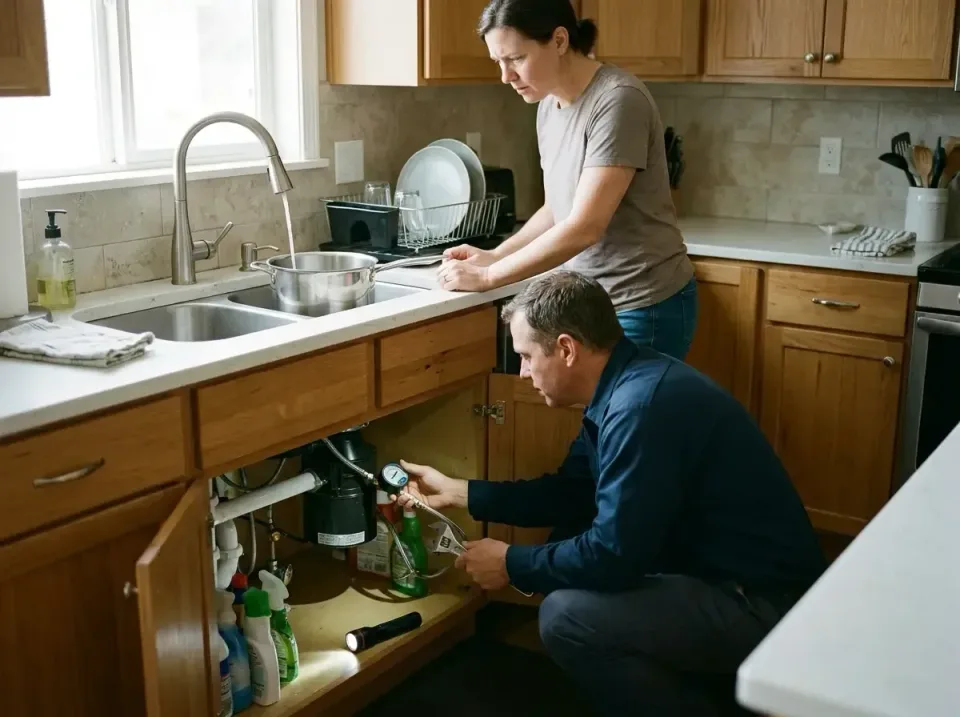
Why Is Water Flow Weak at Every Faucet in a Kentucky Home?
When the kitchen sink, shower, and upstairs bathroom all run weak, the problem is usually somewhere they share not three broken fixtures. A partly closed main valve, restricted service line, or failing pressure regulator can limit water throughout the house.
Start by checking whether the change affects hot and cold water, then see if a nearby outdoor faucet has the same weak stream. Homes near My Old Kentucky Home State Park still need the same careful distinction between a whole-house restriction and a fixture issue; the park’s name is a reminder that older homes deserve checks suited to their actual plumbing.
Kentucky’s State Capitol is another familiar reference point for homeowners comparing local service options. Lexington’s Kentucky Horse Park gives statewide readers a recognizable landmark, but the first useful step is still documenting which taps are affected before requesting a diagnosis.
What Can Cause Weak Flow at Every Faucet?
Weak flow at every faucet usually points to a shared supply problem, such as a restricted main valve, pressure regulator, or water service line. If the change happened suddenly, note when it began and whether both hot and cold taps are affected.
That pattern helps separate a supply issue from a problem limited to the water heater or one fixture. We start by comparing readings and checking shared components before recommending a repair.
At the University of Kentucky, campus buildings rely on dependable water delivery for daily use; at home, the same practical point applies: a single shared restriction can affect every room. A Water Pressure Diagnosis can help identify the source before parts are replaced.
Could a Cold Snap Be Restricting the Supply?
A sudden drop during freezing weather deserves a check of exposed piping and the service entry. Cold snaps can freeze exterior hose bibs and service lines, restricting flow or stopping it altogether.
Don’t use a flame or force a frozen valve; locate the affected area and watch for leaks as it thaws. In eastern Kentucky, snowfall can be heavier than in other parts of the state, so homes in those areas may need closer attention to exposed lines and access points after winter weather.
Freeze-thaw cycles can also stress exposed plumbing and foundations, making a recurring leak or pressure change worth investigating rather than repeatedly tightening a fitting. Breaks Interstate Park is a regional landmark, but the useful homeowner lesson is practical: protect exposed plumbing before harsh weather arrives.
When Should You Call a Plumber Instead of DIY?
You can clean an aerator or confirm that an accessible valve is fully open, but stop if the whole house remains weak or you see moisture near a pipe. Don’t force an older shutoff valve; it may break or fail to seal.
Homes served by wells need a different check than municipal systems, since a pump or pressure tank can be involved. At Keeneland Race Course, steady water service matters across a large property; at home, a repeating pressure change can likewise point to an equipment issue that deserves a proper test.
Our crew checks the accessible supply and records what changes under demand before explaining the likely repair. For symptom clues, see why upstairs faucets barely run.
What Does a Pressure Check Tell You?
A pressure reading helps show whether the supply is low at rest or falls when several fixtures draw water. Ask for a comparison under both conditions rather than relying on how one faucet feels.
The difference can point toward a restriction, a regulator problem, or a supply that cannot keep up with demand. This matters in homes that see seasonal use changes: service lines and exposed plumbing can face added strain as temperatures shift.
A pressure tank repair guide may help rural homeowners recognize cycling symptoms, but a diagnosis should still match the equipment installed at the property. We explain what the test shows and agree on the repair before work begins.
Choose a Repair Based on Where Flow Drops
The right fix depends on whether weak flow affects one fixture, the entire home, or only a private-well system. Kentucky’s rainfall is spread across the year, and heavy rain can add groundwater and sump-pump workload; if a basement is damp, mention it during the plumbing visit. Near Churchill Downs, as elsewhere, a household’s pressure problem should be diagnosed from its own system not guessed from the neighborhood.
| Option | Best for | Key detail |
|---|---|---|
| Fixture check | One slow faucet | A common household pipe is ½-inch; an aerator restriction is local |
| Branch-line check | Several fixtures in one area | Branch water line is commonly ¾-inch |
| Main supply check | Weak flow throughout the home | Main service is commonly ¾–1-inch |
| Regulator check | Whole-home pressure concern | Connections are commonly ¾–1-inch |
Western Kentucky can experience humid heat and strong storms, so note whether your pressure changes after severe weather. Autumn temperature swings may also make seasonal pipe protection worth checking.
What Should You Check Before Calling About Weak Flow?
Pro tip: If every tap is weak, compare more than one fixture and note whether the stream changes when another tap opens. Pressure readings at rest and during use tell different parts of the story; a static reading alone may miss a restriction that shows up under demand.
Severe thunderstorms can bring damaging winds and hail, so after a storm, note any change in supply alongside visible damage or leaks. Homes in areas connected by routes near the Pikeville Cut-Through may face different travel conditions, but the plumbing check itself starts with the same clear symptom notes.
Common mistake: Adjusting a regulator before confirming the reading can hide the cause or create a new pressure problem.
Common Questions About Low Water Pressure Repair in Kentucky
What If Every Faucet Is Weak but the Outdoor Tap Seems Normal?
If every indoor faucet is weak but the outdoor tap seems normal, a restriction inside the home or at a branch connection may be involved. Kentucky’s humid continental climate brings warm summers and cool winters, so include any seasonal pattern in your notes when arranging a plumbing check.
How Much Does It Cost to Diagnose Weak Flow at Every Faucet?
Pressure diagnosis typically costs $75–$250, with testing and access affecting the work involved. A residential supply target is commonly 40–60 psi, so ask whether the estimate includes readings that help explain your home’s results.
Can I Fix Weak Flow at Every Faucet Myself?
Yes, you can check that an accessible main shutoff is fully open and clean a faucet aerator, but those steps will not correct a shared line restriction. Spring storms can bring heavy rain and localized flooding, so avoid entering a flooded area to reach plumbing; contact a plumber if access is unsafe or the whole home remains affected.
Do Kentucky Rules Apply When Repairing Weak Flow Throughout a Home?
Yes, plumbing work in Kentucky is subject to the Kentucky State Plumbing Code, 815 KAR Chapter 20, and applicable permit and inspection requirements. Ask whether the planned repair requires a permit, especially if the work changes supply piping or involves a service-line repair.
Could a Pressure Regulator Cause Weak Flow at Every Faucet?
Tornadoes are possible during Kentucky’s spring storm season, so if the pressure change followed a storm, mention that timing and any visible damage when you arrange a regulator check.
Get a Clear Diagnosis for Weak Water Flow
Weak flow at every faucet is a reason to inspect shared plumbing, especially when the change is sudden, keeps returning, or comes with signs of a leak. High humidity can encourage basement moisture and mold, so don’t dismiss dampness around pipes as unrelated.
Around Louisville Waterfront Park, as throughout Kentucky, homeowners benefit from finding the source before choosing a repair; Rupp Arena and the Big Four Bridge are familiar local landmarks, not substitutes for checking the actual home. Blue Grass Airport is another statewide reference point for readers arranging their next step.
Kentucky Plumbing Pros can trace the pressure issue and explain the findings. Ask us about whole-house pressure repair and what to check before a visit.
Services Offered
Services We Offer in Louisville, KY
Explore related services available in Louisville, KY.
We test home pressure at hose bibs or laundry connections; access and seasonal protection needs shape the quote. University of Kentucky homeowners can plan around year-round rain and autumn pipe checks.
Whole-house pressure repairs trace weak flow across residential plumbing; typical work may run $150–$1,500, depending on access and repair scope.
No Water Pressure Repair tracks a complete home water loss to a valve, service line, or supply problem; many straightforward visits run about $100–$500, depending on access and repair scope.
We trace sudden home-wide pressure drops and repair the cause; access, parts, and the affected line determine typical job cost.
We trace weak hot-water flow to restrictions in the heater or hot-water piping; repair scope and access shape the quote. Churchill Downs-area homes can schedule around storm-season disruption.
We trace changing household pressure to its cause and repair the affected components; many straightforward jobs run $150–$500, depending on parts and access.
We repair or replace residential pressure regulators, checking valve condition and connections; parts, access, and regulator size shape the job cost.
We repair residential filter housings and cartridges; Newport Aquarium visitors know clean water matters, while storms near Churchill Downs can complicate access.
We locate and repair leaking water service lines, including buried pipe sections; typical repairs run $250–$1,500, depending on leak location and excavation.
Single Faucet Pressure Repair clears faucet aerator blockages and addresses fixture-level flow problems for homeowners; typical repairs run $125–$350, depending on access and parts.
We repair or replace residential main shutoff valves, accounting for valve size and access; replacement commonly runs $200–$600.
We repair residential well pumps, checking pressure controls and accessible connections; typical costs depend on pump components and site access.
We repair residential well pressure tanks, including tank components; typical jobs run $250–$1,200, depending on tank capacity and parts needed.
Clogged water line repair clears buildup in accessible home pipes; typical jobs run $150–$600, depending on blockage location and access.
Pipe Scale Removal clears mineral buildup from accessible household piping; typical jobs run $300–$1,500, depending on pipe length, access, and scale severity.
Cities & Towns
Service Areas in Louisville
Select a city to find local low water pressure repair providers we cover in Louisville.
Douglass Hills, KY40243Glasgow, KY42141Carrollton, KY41008Simpsonville, KY40067Maysville, KY41056Fort Wright, KY41011St. Matthews, KY40207Grayson, KY41143Somerset, KY42503Beaver Dam, KY42320Rineyville, KY40162Louisa, KY41230Stanton, KY40380Flemingsburg, KY41041Calvert City, KY42029Morgantown, KY42261Lancaster, KY40444Windy Hills, KY40207Reidland, KY42003Greenville, KY42345Paintsville, KY41240Warsaw, KY41095Hillview, KY40229Vine Grove, KY40160
Show all 171 cities
Cadiz, KY42211Worthington Hills, KY40245Springfield, KY40069Shepherdsville, KY40165Hebron, KY41048Monticello, KY42633Anchorage, KY40223La Grange, KY40031Morganfield, KY42437Cave City, KY42127Jamestown, KY42629Newport, KY41071Brandenburg, KY40108Dawson Springs, KY42408Prospect, KY40059Farley, KY42003Hopkinsville, KY42240Dayton, KY41074Flatwoods, KY41139Jeffersontown, KY40220Greensburg, KY42743Lakeside Park, KY41017Nicholasville, KY40356Crescent Springs, KY41017Columbia, KY42728Alexandria, KY41001
Get a Quote
Get a Low Water Pressure Repair Quote in Louisville, KY
Share job details below or call our team directly. Phone: (877) 773-0781