Shower Pressure Repair covers showerhead and fixture flow issues; typical repairs run $150–$500, depending on parts and access.
Low Water Pressure in Kentucky: When a Water Line Leak Needs Repair
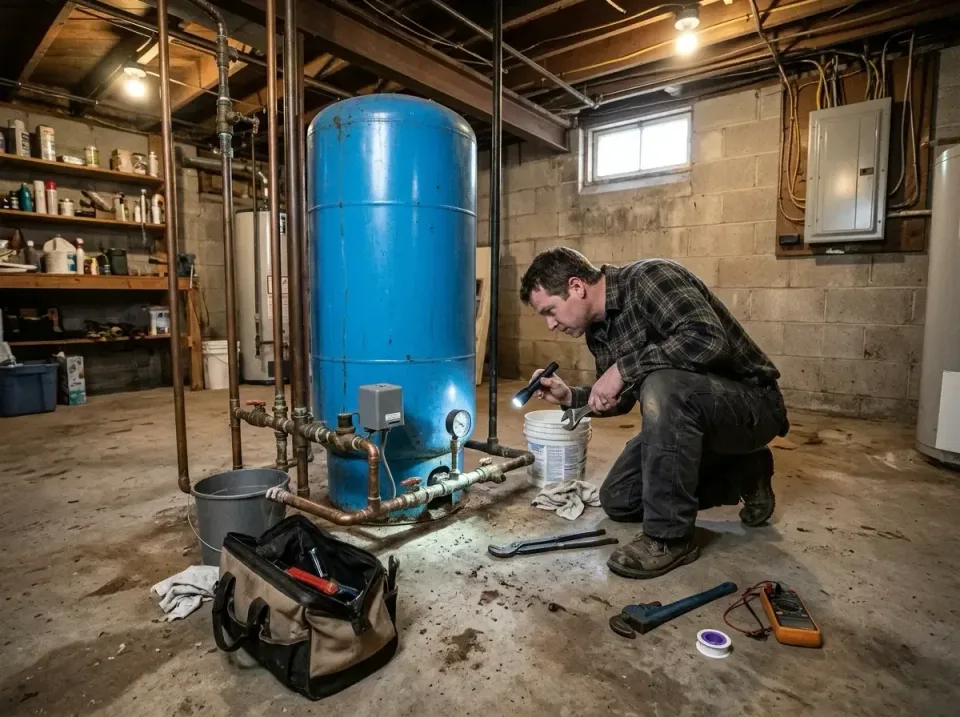
Could a Kentucky Water Line Leak Explain Low Pressure?
Weak flow at every faucet or a sudden pressure drop can point to a leak, especially when the change affects the whole house. Look for damp soil, new wet patches, or a water meter that moves when fixtures are off; those clues call for a careful inspection, not guesswork.
A ¾–1-inch main service line can affect flow throughout the home if damaged. In western Kentucky, near Western Kentucky University, humid heat and strong storms can make an unexplained soggy area harder to interpret, so compare it with your usual yard conditions.
The Florence Y’all Water Tower is a familiar local landmark, but household pressure needs its own measurement. We trace the line and explain what we find before recommending a repair.
When Does Low Pressure Point to a Line Leak?
If water pressure suddenly fell throughout the house, check whether every fixture is affected and look for water where it should not be. A leak in the water service line can reduce the supply reaching multiple rooms; a single slow faucet more often points to a local restriction.
Watch for a meter that continues to register use while all taps are closed, unexplained wet ground, or a new sound of running water. These clues do not prove a leak, but together they make a professional check sensible.
At the Kentucky State Capitol, water service supports a large, active building; at home, the same basic lesson applies: a pressure complaint needs a source identified before parts are changed. Our crew isolates sections and checks accessible piping, then explains whether the evidence supports leak repair or another cause.
Could Kentucky Weather Make a Leak Harder to Spot?
Western Kentucky can bring humid heat and strong storms. That combination can leave soil wet for reasons unrelated to plumbing, so note whether a damp patch returns during dry weather or appears near the buried service route. In eastern Kentucky, snowfall can be heavier; when snow melts, surface water may also disguise a leak’s footprint. Do not rely on one wet spot alone.
Ice storms can disrupt travel and plumbing service access, so if you suspect an active leak, locate the main shutoff and keep the area around it accessible while arranging an inspection. We have also seen homeowners mistake runoff for a pipe problem or dismiss a persistent wet area as weather. A meter check and controlled leak isolation help separate those possibilities.
What Should You Check Before Calling a Plumber?
First, compare several fixtures and note whether cold and hot sides behave differently. Check that the main shutoff is fully open, but do not force an old or stiff valve; a damaged valve can complicate the loss of pressure.
Look at the meter when no water is being used, and write down what you observe. Avoid digging near a suspected service line: the leak may be deeper or elsewhere, and excavation can damage buried utilities.
A safe homeowner check ends with observation, not pipe cutting. If the pressure problem is isolated to one faucet, an aerator may be clogged; if the whole house is affected, leak isolation and pressure testing can narrow the cause. Our Water Pressure Diagnosis starts by comparing symptoms with test results instead of assuming every pressure drop means a leak.
When Should You Call a Pro Instead of DIY?
Call a plumber when the pressure loss affects several fixtures, the meter moves with everything off, or you find persistent wet ground or water damage. Those signs can mean a concealed leak, and opening walls or excavating without locating the pipe can add repair work. A licensed plumber can determine whether the problem lies in the service line, shutoff, regulator, or another part of the supply.
The University of Kentucky serves a busy campus; at home, any repair should still be planned around the household’s water needs. Near Lexington’s Kentucky Horse Park, a homeowner facing a suspected buried-line leak should note where the wet area appears and keep access clear rather than starting an uncertain dig.
My Old Kentucky Home State Park is another reminder that older properties deserve a careful look at existing plumbing before repairs begin. We explain the evidence and agreed scope before work starts.
How Is a Water Line Leak Repaired?
The repair depends on where the leak is and what condition the pipe is in. After locating the affected section, we plan access, protect nearby surfaces, and make the agreed repair; buried lines may require excavation, while accessible piping may not.
We then restore the supply and check that the original pressure complaint has improved. A repair should address the damaged section, not simply mask a symptom.
Kentucky Plumbing Pros has served Kentucky for more than 11 years. Our team uses a diagnosis-first process, explains findings in plain language, and keeps scheduling expectations clear. If you are comparing whole-house symptoms with one-room problems, Why Water Flow Is Weak at Every Faucet in a Kentucky Home and What to Check When Water Pressure Suddenly Falls Throughout Your House offer related guidance.
Which Repair Fits a Kentucky Water Pressure Problem?
Choose based on where the pressure loss occurs and what testing shows; a whole-house symptom does not automatically mean a buried leak.
| Option | Best for | Key detail |
|---|---|---|
| Whole-house pressure restoration | Several rooms affected | Compare pressure with water stopped and flowing to locate a system-wide loss. |
| Shower pressure repair | Shower flow drops during use | Federal showerheads are limited to 2.5 gallons per minute; a compliant fixture may still have a supply problem. |
| Single-faucet repair | One tap runs poorly | A ½-inch fixture branch may have a local restriction; aerator cleaning will not restore whole-house pressure. |
| Pressure-reducing valve repair | Incoming pressure is controlled poorly | Regulators commonly connect to ¾–1-inch piping; test before adjusting or replacing. |
| Well pump and tank repair | Private-well pressure fluctuates | Check the pump and tank rather than assuming a municipal service-line leak. |
In Old Louisville, account for cold snaps that can freeze exposed hose bibs or service lines before settling on a repair. Heavy rainfall can raise groundwater and increase sump-pump workloads, so a wet basement near Paducah’s Lower Town Arts District is not, by itself, proof of a leaking pipe. Natural Bridge State Resort Park is a useful regional reference, but the home’s test results not the nearest landmark determine the repair.
A Meter Check Can Prevent a False Leak Call
Pro tip: A pressure number alone does not show how much water a fixture delivers: static pressure is measured with flow stopped, while flowing pressure shows what happens under demand. We test at an accessible connection and compare the readings before deciding whether to isolate a line or inspect another component.
Near Louisville Waterfront Park, that same step-by-step approach matters as much as it does in a rural home; summer thunderstorms can interrupt power to well pumps, creating a pressure symptom that is not a pipe leak. Shaker Village of Pleasant Hill offers a familiar reminder that Kentucky homes and settings differ, so the test plan should fit the property.
Winters bring occasional freezes, making exposed plumbing worth checking. Common mistake: Replacing a regulator before confirming the source of the pressure loss.
Common Questions About Low Water Pressure Repair in Kentucky
Can Low Water Pressure Still Mean a Water Line Leak If the Meter Barely Moves?
Yes, a small or intermittent leak may not make the meter movement obvious during a short check, so repeat the observation with all fixtures off and note the pressure symptoms. If you are near the Muhammad Ali Center or elsewhere in Kentucky, keep a record of damp areas and have a plumber isolate the line rather than digging on guesswork.
How Much Does Water Line Leak Repair Cost When Pressure Falls Throughout a Kentucky Home?
Water line leak repair is typically $250–$1,500, with the location and excavation needs driving the range; pressure diagnosis is $75–$250, depending on testing and access. Around Abraham Lincoln Birthplace National Historical Park, as elsewhere, the first step is confirming the source so the quote reflects the actual repair.
Should I Try to Repair a Water Service Line Myself If My Faucets Lose Pressure?
No, do not cut or excavate a suspected service line yourself; call a plumber if several fixtures lose pressure, water appears in the yard, or the meter registers use with taps closed. Near Devou Park, as in other parts of the region, professional leak isolation can prevent a mistaken dig from damaging buried piping or adding repair work.
Do Kentucky Plumbing Permits Apply to a Water Line Leak Repair?
Kentucky State Plumbing Code, 815 KAR Chapter 20, and applicable Kentucky plumbing permit and inspection requirements may govern the work, depending on its scope and location. A Kentucky licensed plumbing contractor can explain whether the specific repair requires a permit or inspection before work begins.
Could a Well Pressure Tank Be the Next Issue If a Water Line Leak Is Not Found?
Yes, a pressure tank or pump problem can cause fluctuating pressure when testing does not support a service-line leak, so note whether the symptoms change as the pump cycles. For a property near Jenny Wiley State Resort Park or elsewhere on a private well, Kentucky Plumbing Pros can check the system and explain whether Well Pressure Tank Repair fits the findings.
Should You Call for Kentucky Water Line Leak Help?
Weak flow at every faucet, pressure drops during use, or a meter that moves when fixtures are off are good reasons to arrange a diagnosis. Do not assume the nearest wet patch identifies the leak; Ashland, The Henry Clay Estate and other older settings remind us that site conditions can complicate what looks like a simple problem.
At Big Four Bridge, changing seasons are part of local life, and hot, humid summers can increase indoor cooling demand while a hidden leak still needs its own investigation. Churchill Downs is a landmark, not a pressure test your plumbing needs measured evidence.
Tell us which fixtures are affected and what you have noticed. Contact Kentucky Plumbing Pros at (877) 773-0781 or request Water Line Leak Repair; we’ll trace the cause and explain the proposed work.
Services Offered
Services We Offer in Louisville, KY
Explore related services available in Louisville, KY.
We test home pressure at hose bibs or laundry connections; access and seasonal protection needs shape the quote. University of Kentucky homeowners can plan around year-round rain and autumn pipe checks.
Whole-house pressure repairs trace weak flow across residential plumbing; typical work may run $150–$1,500, depending on access and repair scope.
No Water Pressure Repair tracks a complete home water loss to a valve, service line, or supply problem; many straightforward visits run about $100–$500, depending on access and repair scope.
We trace sudden home-wide pressure drops and repair the cause; access, parts, and the affected line determine typical job cost.
We trace weak hot-water flow to restrictions in the heater or hot-water piping; repair scope and access shape the quote. Churchill Downs-area homes can schedule around storm-season disruption.
We trace changing household pressure to its cause and repair the affected components; many straightforward jobs run $150–$500, depending on parts and access.
We repair or replace residential pressure regulators, checking valve condition and connections; parts, access, and regulator size shape the job cost.
We repair residential filter housings and cartridges; Newport Aquarium visitors know clean water matters, while storms near Churchill Downs can complicate access.
We locate and repair leaking water service lines, including buried pipe sections; typical repairs run $250–$1,500, depending on leak location and excavation.
Single Faucet Pressure Repair clears faucet aerator blockages and addresses fixture-level flow problems for homeowners; typical repairs run $125–$350, depending on access and parts.
We repair or replace residential main shutoff valves, accounting for valve size and access; replacement commonly runs $200–$600.
We repair residential well pumps, checking pressure controls and accessible connections; typical costs depend on pump components and site access.
We repair residential well pressure tanks, including tank components; typical jobs run $250–$1,200, depending on tank capacity and parts needed.
Clogged water line repair clears buildup in accessible home pipes; typical jobs run $150–$600, depending on blockage location and access.
Pipe Scale Removal clears mineral buildup from accessible household piping; typical jobs run $300–$1,500, depending on pipe length, access, and scale severity.
Cities & Towns
Service Areas in Louisville
Select a city to find local low water pressure repair providers we cover in Louisville.
Danville, KY40422Stanford, KY40484Jamestown, KY42629Shelbyville, KY40065Scottsville, KY42164Columbia, KY42728Francisville, KY41048Hartford, KY42347Horse Cave, KY42749Brooks, KY40109Claryville, KY41001Westwood, KY41101Cumberland, KY40823Richmond, KY40475Albany, KY42602Dawson Springs, KY42408Independence, KY41051Williamstown, KY41097Cynthiana, KY41031Barbourville, KY40906Walton, KY41094Lancaster, KY40444Ludlow, KY41016Louisville, KY40218
Show all 171 cities
Douglass Hills, KY40243Sorgho, KY42301Prestonsburg, KY41653Lebanon, KY40033Crescent Springs, KY41017Hillview, KY40229Cadiz, KY42211Mount Vernon, KY40456Wilmore, KY40390St. Matthews, KY40207Murray, KY42071Tompkinsville, KY42167Lebanon Junction, KY40150Franklin, KY42134Newport, KY41071Hendron, KY42003Manchester, KY40962Harrodsburg, KY40330Madisonville, KY42431Lakeside Park, KY41017Edgewood, KY41017Worthington Hills, KY40245Morehead, KY40351Maysville, KY41056Fort Campbell North, KY42223Leitchfield, KY42754
Get a Quote
Get a Low Water Pressure Repair Quote in Louisville, KY
Share job details below or call our team directly. Phone: (877) 773-0781